
How EECP Therapy Helps Manage Chronic Angina Without Surgery
Patients living with chronic angina find it difficult to engage in daily activities. Simple things such as walking, going up and down the stairs, and even carrying things can cause pain in the chest region, thereby making them feel concerned about their heart condition. While drug therapy, angioplasty, and surgery are some of the treatment methods available for this condition, all patients may not be the right candidates for surgery or other medical procedures.
Enhanced External Counter Pulsation (EECP) therapy has proven to be a relatively safe therapy which helps to increase the amount of blood reaching the heart without going through surgery. EECP therapy encourages the formation of natural collateral blood vessels and helps to improve circulation.
In this blog, we will be discussing how EECP therapy works, who is eligible for this type of therapy, and what are the benefits of this therapy.
Table of Contents
- What Is Chronic Angina?
- What Causes Chronic Angina?
- Understanding EECP Therapy
- How EECP Therapy Works
- How EECP Helps Manage Chronic Angina
- Who Can Benefit from EECP Therapy?
- Benefits of EECP Therapy
- What Happens During an EECP Session?
- Is EECP Therapy Safe?
- Lifestyle Changes That Support Better Heart Health
- Choosing the Right EECP Centre
- Conclusion
- Frequently Asked Questions
What Is Chronic Angina?
Chronic angina refers to recurring pain or discomfort due to inadequate blood supply to the muscles of the heart. It normally happens when the heart needs more oxygen than what the narrowed coronary arteries can deliver.
Some of its manifestations include:
- Tightness or pressure in the chest area
- Chest pain that moves into the shoulders, neck, jaw, and arm areas
- Difficulty breathing
- Feeling tired
- Uncomfortable feeling during exercise or emotional stress
Even with the use of medication, some people still have recurrent attacks.
What Causes Chronic Angina?
The most common cause is coronary artery disease (CAD), where plaque gradually narrows the arteries supplying blood to the heart.
Risk factors include:
- High blood pressure
- High cholesterol
- Diabetes
- Smoking
- Obesity
- Physical inactivity
- Family history of heart disease
- Advancing age
Managing these risk factors is essential for improving long-term heart health.
Understanding EECP Therapy
EECP or Enhanced External Counter Pulsation is a type of therapy that is done without any invasive method and it aims to increase blood flow to the heart muscles.
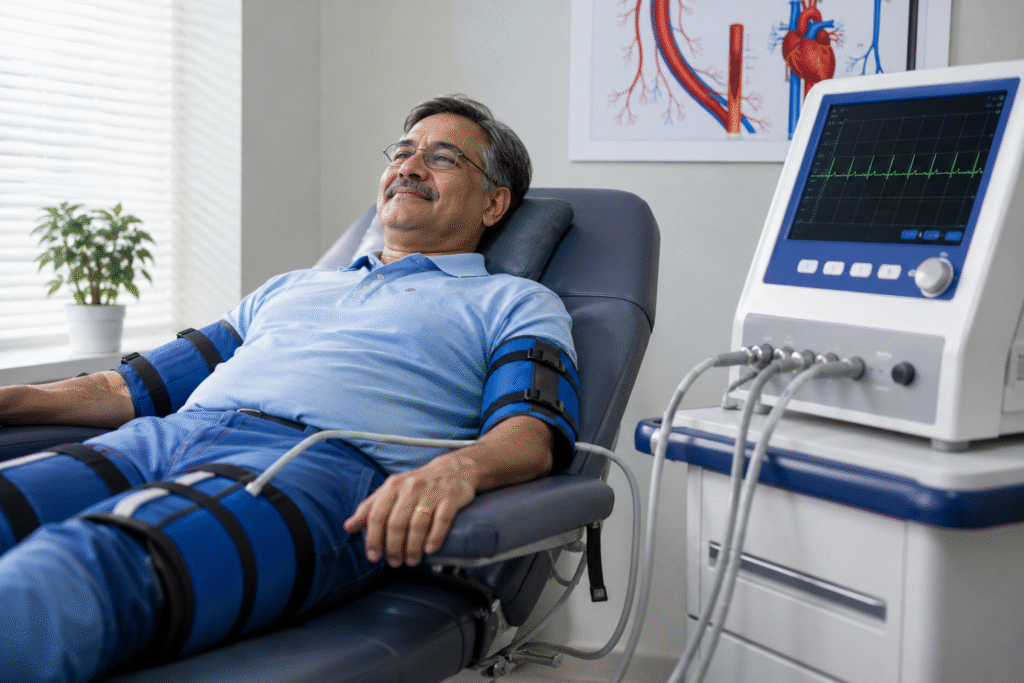
During the EECP procedure, inflatable cuffs are placed on the legs and they expand and collapse according to the beat of the heart, which increases the flow of blood to the heart when it relaxes and reduces its burden when it contracts.
People coming to the EECP clinic in Ernakulam usually prefer this treatment due to many factors including comfort and convenience.
How EECP Therapy Works
EECP therapy is carefully synchronized with your heart rhythm using an electrocardiogram (ECG).
The treatment works by:
- Increasing blood flow to the coronary arteries
- Improving oxygen delivery to the heart muscle
- Encouraging the formation of natural collateral blood vessels
- Reducing the workload on the heart
- Enhancing overall circulation throughout the body
Over multiple treatment sessions, these improvements help reduce angina symptoms and improve exercise tolerance.
How EECP Helps Manage Chronic Angina
Improves Blood Supply to the Heart
By enhancing circulation, EECP helps deliver more oxygen-rich blood to areas of the heart affected by narrowed arteries.
Promotes Natural Bypass Circulation
One of the most important advantages of EECP is that it can promote the growth of collaterals. Collaterals are natural pathways that can allow blood to flow around blockages or narrowings in the artery.
Reduces Chest Pain Episodes
Many patients report fewer angina attacks after completing the recommended course of treatment.
Improves Exercise Capacity
As circulation improves, patients often experience greater stamina and are able to perform daily activities with less discomfort.
Enhances Quality of Life
Reduced symptoms allow many individuals to return to work, hobbies, and physical activities with greater confidence.
Patients receiving care at an eecp treatment centre in Kochi frequently experience noticeable improvements in their daily functioning after completing the full course of therapy.
Who Can Benefit from EECP Therapy?
EECP therapy may be recommended for individuals who:
- Have chronic stable angina
- Continue to experience symptoms despite medication
- Are not suitable candidates for bypass surgery
- Are not eligible for angioplasty
- Have diffuse coronary artery disease
- Want a non-invasive treatment option
- Require symptom management after previous heart procedures
A cardiologist will determine whether EECP is appropriate based on your medical history and current heart condition.
Benefits of EECP Therapy
EECP offers several advantages over invasive procedures.
Non-Surgical Treatment
No incisions, anesthesia, or hospital admission are required.
Minimal Recovery Time
Patients usually resume normal daily activities immediately after each treatment session.
Outpatient Procedure
Treatment is typically performed without overnight hospitalization.
Improved Circulation
Better blood flow supports improved oxygen delivery to the heart and other organs.
Long-Term Symptom Relief
Many patients continue experiencing reduced angina symptoms for months or even years following treatment.
Individuals visiting an eecp treatment centre in Kerala benefit from personalized treatment plans designed to improve heart function while minimizing the need for invasive procedures.
What Happens During an EECP Session?
A typical EECP session lasts about one hour. The process generally includes:
- ECG leads are attached to monitor heart rhythm.
- Inflatable cuffs are wrapped around the legs.
- The cuffs inflate and deflate according to your heartbeat.
- You remain awake and relaxed throughout treatment.
- Sessions are repeated over several weeks, typically totaling around 35 treatments.
Most patients find the therapy comfortable and well tolerated.
Is EECP Therapy Safe?
EECP has been extensively studied and is considered safe for many patients with chronic stable angina. However, it may not be appropriate for individuals with certain conditions, including:
- Severe valve disease
- Active blood clots
- Severe peripheral vascular disease
- Uncontrolled hypertension
- Certain abnormal heart rhythms
A thorough medical evaluation helps determine whether the therapy is suitable for each patient.
Lifestyle Changes That Support Better Heart Health
EECP therapy works best when combined with healthy lifestyle habits. These include:
- Following a heart-healthy diet
- Exercising regularly as advised by your physician
- Maintaining a healthy weight
- Managing diabetes and blood pressure
- Quitting smoking
- Reducing stress
- Taking prescribed medications consistently
These changes contribute to better long-term cardiovascular health.
Choosing the Right EECP Centre
Selecting an experienced treatment provider is essential for achieving the best outcomes. Look for a centre that offers:
- Qualified cardiac specialists
- Comprehensive patient assessment
- Modern EECP equipment
- Personalized treatment plans
- Continuous monitoring during therapy
- Post-treatment follow-up care
Choosing an experienced eecp treatment centre in Ernakulam ensures that treatment is delivered safely and tailored to your individual cardiovascular needs.
Conclusion
It is common to have your everyday activities adversely impacted by chronic angina. However, surgery is not necessarily the only way to deal with it. EECP treatment represents a scientifically proved, non-surgical technique that helps improve blood flow, promote natural formation of collaterals, and decrease the number of angina attacks without undergoing surgery or prolonged recovery time.
EECP treatment gives you back hope and confidence, increased endurance and quality of life. EECP treatment together with lifestyle modification will help those who suffer from chronic angina live a more active life.
FAQ
EECP (Enhanced External Counterpulsation) is a non-invasive treatment procedure where blood flow to the heart muscle is improved by using inflatable cuffs applied to the patient’s legs.
No. In general, this treatment is painless and most people feel comfortable during the procedure.
Typically, the number of treatments per patient is 35 one-hour treatments, however, it can vary depending on your cardiologist’s recommendation.
In some cases EECP is an alternative treatment, but it does not necessarily replace surgery.
Many people report prolonged symptom improvement that lasts for months or years, especially with the proper medication and healthy life style.
Some patients with specific conditions (severe valve disease, active blood clot, poorly controlled high blood pressure, etc.) cannot use this treatment method due to their health problems.